
Tesla Wall Connector Installation in Georgia
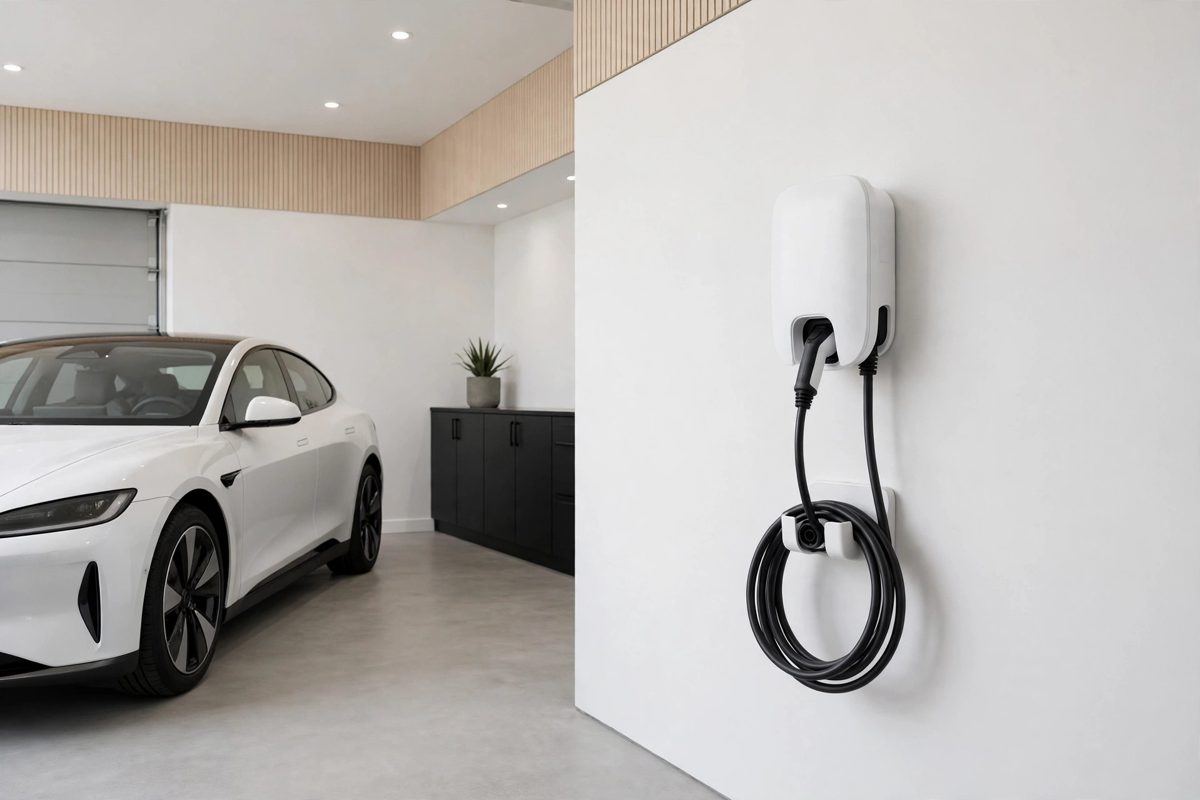
A Tesla Wall Connector is the natural home charger for a Tesla, and the Universal Wall Connector can also charge non-Tesla cars. Installation in Georgia follows the same rules as any Level 2 job: panel check, dedicated circuit, permit and inspection where required, and testing — performed by a licensed, insured independent electrician.
Wall Connector and Universal Wall Connector
The Tesla Wall Connector is designed for Tesla vehicles. The Universal Wall Connector adds a built-in adapter so it can charge a Tesla and most non-Tesla EVs with the common connector. If your household has one Tesla and one non-Tesla, or you may switch brands later, the Universal version is worth discussing before you buy — it avoids a second install later. Our Georgia EV charger installation network can match you with an electrician familiar with Tesla installs, including Tesla-approved experience where the electrician holds it; we do not claim Tesla certification for this website itself.
Power sharing for two Teslas
Two Wall Connectors can share power, capped at a safe total, so both cars charge overnight without exceeding panel capacity. This is the same load-management logic used for other dual-EV homes, applied to Tesla hardware. The electrician sets the sharing limit from the load calculation, not from the charger default.
Cost and timing, honestly stated
Reported Tesla Wall Connector installs in Georgia checks ranged from about $750 to $2,500, depending on circuit, distance, and panel work. That is a reported range, not a quote. A standard install near the panel, with no panel work, sits at the lower end; a long run, a detached garage, or a panel upgrade sits at the higher end. Get the circuit size and panel outcome in writing before you agree.
Related Georgia pages: EV charger installation in Atlanta EV charger installation in Marietta EV charger installation in Lawrenceville — and back to the statewide hub, Georgia Home Charger's statewide hub.
Georgia Home Charger is a statewide referral service. We connect you with licensed, insured independent electricians in Georgia. We do not perform installations ourselves — the independent local electrician who visits your home performs the work.
Wall Connector versus Universal Wall Connector
Tesla offers two related wall chargers, and the difference matters more than the name suggests. The standard Wall Connector is built for Tesla vehicles. The Universal Wall Connector adds a built-in adapter so it can charge non-Tesla vehicles as well, which matters if your household has, or may soon have, a non-Tesla car, or if a future buyer or tenant drives something else. For a Tesla-only household in a long-term home, either works. For a mixed household, a rental, or a home you may sell, the Universal option is the more flexible fixture, and it is worth discussing before the electrician orders anything.
Both versions need the same electrical fundamentals as any Level 2 charger: a dedicated circuit, a panel that can support it, and a mounting location that keeps the cable short and safe. The Tesla-specific parts are the setup and the app, not the wiring, and a licensed electrician who has installed wall connectors before will handle the wiring the same way they handle any dedicated EV circuit. Do not let a brand name distract from the panel check. A Tesla charger on an overloaded panel is no safer than any other charger on an overloaded panel.
Power sharing, placement and what to ask
Power sharing is the Tesla feature most two-car Tesla households should ask about. Two wall connectors can share a single circuit, splitting power between two cars instead of requiring two full circuits. That is useful in a garage with two Teslas, and it is another reason to mention a second car at the quote stage even if it has not arrived yet. Placement matters too: mount the connector where the cable reaches the charge port without draping across a walkway, and keep it within a sensible distance of the panel to avoid an unnecessarily long run.
When you call, the useful answers are the same as for any charger: your city, your panel information, your parking spot, and whether you drive a Tesla today, may drive a non-Tesla tomorrow, or have two cars to plan for. With those answers, a matched electrician can recommend the right connector, the right circuit size, and the right mounting location, and can explain whether power sharing or a Universal connector changes the recommendation for your home.
Frequently asked questions
Can a Tesla Wall Connector charge a non-Tesla?
A standard Tesla Wall Connector is Tesla-focused. The Universal Wall Connector is designed to charge Tesla and non-Tesla cars. Confirm the exact model with your electrician before purchase.
Do I need a Tesla-certified installer?
Experience with Tesla installs helps, especially for power sharing and firmware setup. Ask what Tesla installs the visiting electrician has actually done. This website does not claim certification for itself.
How much does it cost to have a Tesla Wall Connector installed?
There is no single fixed price, and the charger unit is separate from the labour. Reported market ranges from October 2026 Georgia checks put Tesla Wall Connector labour and wiring roughly in the $750 to $2,500 range, with Atlanta installs reported around $899 at the low end, about $1,600 on average, and up to $3,700 at the high end. Your final quote depends on panel capacity, garage distance, and any panel work.
Can I install my own Tesla Wall Connector?
A new 240-volt circuit is not a simple plug-in job. In most Georgia jurisdictions it needs a permit and inspection, and the work should be done by a licensed electrician who can size the circuit, check the panel with a load calculation, and get the install inspected. A do-it-yourself install risks permit, inspection, and warranty problems, so call first and let the matched electrician confirm what your home and local rules allow.
How long does it take to install a Tesla Wall Connector?
Most straightforward installs are completed in a few hours once the electrician is on site, with reported ranges of 1 to 4 hours for standard residential installs in Georgia checks. Panel work, a long cable run from the panel to the garage, or trenching takes longer and should be quoted separately.